How to decide what you actually need
Buy accessories reactively, not in a bundle. Almost every item here answers a complaint you will recognize the moment you have it:
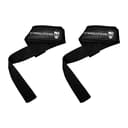
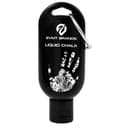
- “My hands give out before my back does.” Lifting straps on heavy rows, shrugs and deadlifts; liquid chalk for everything else.
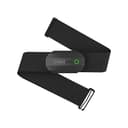
- “My watch says 95 bpm in the middle of an interval.” A chest strap. Wrist optical sensing is at its worst exactly when effort changes fastest.
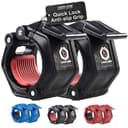
- “The plates rattle and slide on the bar.” Proper collars. Spring clips are the part of a barbell setup people regret keeping.
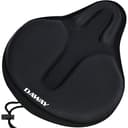
- “The saddle, not my legs, is ending the ride.” A gel seat cover, before you conclude the bike was a mistake.
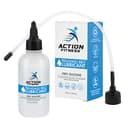
- “My treadmill is getting louder.”Silicone belt lubricant — friction between belt and deck is what kills treadmill motors.
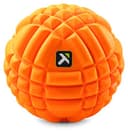
- “The roller does nothing for my glutes.” A ball. A 5 in roller bridges over deep tissue; a 5 in ball gets into it.
Grip: chalk or straps?
They solve the same problem differently. Chalkimproves your own grip by absorbing sweat, so your hands still do the work — use it for everything, all the time. Straps remove grip from the equation entirely by tying you to the bar, which is what you want on the heaviest pulling sets where grip is the limiting factor rather than the target. Using straps on every set lets grip strength lag behind everything else, so keep them for the top sets.
Liquid chalk deserves a note for home use specifically: block chalk leaves dust on everything within a few feet, which is fine in a garage and unwelcome in a spare bedroom. Liquid chalk uses the same active ingredient — magnesium carbonate — without the cloud.
Maintenance is the accessory people skip
Treadmill belt lubricant is the clearest example of a cheap item preventing an expensive failure. Friction between the belt and the deck increases the load on the motor, and the motor is the part that fails. Use only 100% silicone, which is what treadmill makers specify — never a petroleum oil or a spray intended for something else — and check your machine’s own manual for the interval, since it varies by model and use. Barbell collars belong in the same category: plates that shift mid-set are a form’s worst enemy and, on a heavy bench, a genuine safety issue.
What we deliberately do not recommend
There is a whole industry of accessories that do not survive the test above. Weighted vests and ankle weights for walking, vibrating platforms, sauna suits, EMS abdominal belts, and anything advertised as targeting fat in a specific area — none of these earn a place next to the basics, and some actively change your gait or add joint load for no benefit. We also publish no nutrition or supplement content, so you will not find shaker bottles or powders here.
The honest hierarchy: get the equipment right first (our build guide sets the order), then buy the accessory that fixes the specific thing stopping your sessions. Buying the accessory kit before the equipment is a way of spending money that feels like training.
Cost, in perspective
Everything on this page is inexpensive relative to what it protects or unlocks — which is exactly why they are worth buying deliberately rather than impulsively. Add the ones that answer a complaint you actually have; skip the rest until you do. If you are pricing out a whole setup, our home gym cost breakdown shows where accessories sit against the big-ticket items, and every price on this page is live and dated rather than typed in and left to go stale.