Cast Iron vs Adjustable Kettlebell
A traditional single-weight cast bell against a dial-adjustable one that replaces six. Feel, weight range, footprint and price — which kettlebell makes sense for your home gym.
The kettlebell question isn’t which brand — it’s whether to buy fixed or adjustable. A cast iron kettlebell like the Yes4All is a single-piece bell in one weight: cheap, indestructible, and traditional in feel. An adjustable kettlebelllike the Bowflex SelectTech 840 packs six weights (8–40 lb) into one dial-select unit, so it replaces a small rack of bells in a single footprint.
The trade-off is classic: the fixed bell gives you the best feel and the lowest price per weight, but you buy a new one every time you get stronger; the adjustable gives you a whole range in one spot, at a premium and with a larger body. Which is right depends on how many weights you need and how much space you have. Both options below show a live price.
How this is funded: we earn a commission if you buy through our links, at no extra cost to you. It never changes which product we recommend, and we’ll tell you when we’d skip one. Full disclosure.
| Feature | Cast iron (fixed) | Adjustable (dial) |
|---|---|---|
| Weights available | One fixed weight (choose 5-80 lb) | 6 settings: 8, 12, 20, 25, 35, 40 lb |
| Adjustment | Buy a new bell per weight | Dial select |
| Feel | Traditional, compact cast bell | Larger body, slightly bulkier |
| Construction | Single-piece cast iron | Dial mechanism with weight plates |
| Footprint | One bell per weight | One unit replaces six bells |
| Finish | Painted cast iron | Molded housing + dial |
| Price | Cheapest per weight | Premium for the range |
| Best for | One or two weights, purists | A range in one footprint |
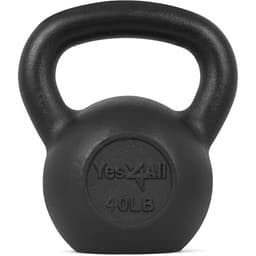
Cast iron (fixed)
Yes4All Cast Iron Kettlebell
Buy this if: First-time buyers or minimalists picking up one or two fixed weights who want the most traditional feel.
Strengths
- Solid one-piece cast iron with no welds or moving parts
- Among the cheapest kettlebells available
- Traditional, compact bell feel for swings and carries
Trade-offs
- You buy a new bell every time you need a different weight
- Painted finish can chip and roughen the handle
- Handle size and texture vary between weights
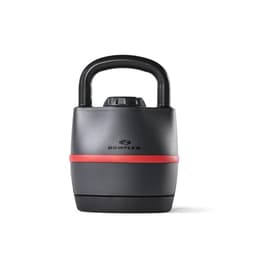
Adjustable (dial)
Bowflex SelectTech 840 Adjustable Kettlebell
Buy this if: Home users who want a range of kettlebell weights in a single footprint and value space over pure feel.
Strengths
- One dial selects six weights from 8 to 40 lb
- Replaces a small rack of separate bells
- Saves floor space and money versus buying six kettlebells
Trade-offs
- Larger body than a fixed bell of the same weight
- Uneven jumps (e.g., 12 to 20 lb) leave gaps
- Higher upfront price and moving parts to trust
Price as of September 21, 2026. #ad How we’re funded
Feel: the cast bell still wins for purists
A single-cast kettlebell has a compact, balanced feel that’s hard to beat for ballistic work — swings, cleans, snatches. Nothing shifts, the shape is exactly what generations of kettlebell training assumed, and the handle-to-bell geometry is consistent. An adjustable bell has to package multiple weights into one body, so it’s physically larger at a given weight and the balance is slightly different. Most people adapt quickly, but if you’re doing high-rep technical work and want the most natural feel, the fixed bell has the edge.
Weight range and progression
Here the adjustable earns its keep. Kettlebell exercises use very different loads — you might swing heavy but press light — so having several weights genuinely matters. A single cast bell locks you to one weight; getting a second or third means buying (and storing) more bells. The Bowflex 840 covers 8 to 40 lb across six settings from one unit, which is ideal for a home user who wants goblet squats, presses and swings at different loads without a rack. The catch is the jumps aren’t perfectly even (there’s a gap between 12 and 20 lb), so it’s a range, not infinite granularity.
Space, price and durability
A fixed bell is the cheapest and most durable option there is — a lump of iron with nothing to break — but three or four of them take up floor space and add up in cost. The adjustable replaces that small collection in one footprint, which is a real win in a small home gym, but it costs more upfront and has a dial mechanism you have to trust and keep from being dropped. If you know you’ll only ever want one or two weights, the cast bells are cheaper and bombproof; if you want a spread of weights and limited space, the adjustable is the better value overall.
Which should you buy?
Buy fixed if you’re starting with one or two weights, want the best feel, or are price-sensitive — and add bells as you progress. Buy adjustable if you want a range of loads for different lifts without cluttering the room. Kettlebells are one of the most space-efficient ways to hit the strength side of the muscle-strengthening guidelines. Compare specific bells, coated and adjustable, in our best kettlebells roundup, and see how a kettlebell fits a full setup in how to build a home gym.
Frequently asked questions
Is a cast iron or adjustable kettlebell better?
It depends on how many weights you need. A cast iron kettlebell is cheaper, more durable and feels the most traditional, but each one is a single fixed weight. An adjustable kettlebell packs several weights into one unit, saving space and money if you want a range. Choose fixed for one or two weights and best feel; adjustable for variety in a small footprint.
Do adjustable kettlebells feel different from cast iron?
Slightly. An adjustable bell has to house multiple weights, so its body is larger at a given weight and the balance differs a little from a compact single-cast bell. Most people adapt quickly, but for high-rep ballistic work like swings and snatches, many lifters still prefer the natural feel of a traditional cast iron kettlebell.
How many kettlebell weights do I need?
Most home users get a lot from two or three: a lighter weight for presses and getups, and a heavier one for swings and squats. That is exactly the case an adjustable bell is built for. If you already know you only want one weight to start, a single cast iron bell is the cheaper, simpler choice.
Are adjustable kettlebells worth the extra money?
If you want a range of weights and have limited space, yes — one adjustable unit is cheaper and smaller than buying six separate bells. If you only need one or two fixed weights, cast iron bells cost less and have nothing to break. Weigh how many weights you realistically need against your budget and storage.
Sources
- CDC — Adult Activity: An Overview — CDC on muscle-strengthening 2+ days/week, 8–12 reps, all major muscle groups (accessed July 19, 2026)
- American Heart Association — Recommendations for Physical Activity in Adults — AHA's 150 min/week moderate aerobic + 2 days strength recommendation (accessed July 19, 2026)
- U.S. HHS / ODPHP — Physical Activity Guidelines for Americans (2nd ed.) — Federal guideline: 150–300 min/week moderate aerobic + muscle strengthening 2+ days (accessed July 19, 2026)
Keep reading
Best Kettlebells
Cast iron, coated and adjustable bells compared on handle, finish and weight jumps.
See the picksAdjustable vs Fixed Dumbbells
The same fixed-vs-adjustable question, for dumbbells.
Read the comparisonBest Adjustable Dumbbells
If you want one pair that replaces a rack, start here.
See the picksStrength Training
How kettlebells fit alongside dumbbells, bands, racks and benches.
Explore strength