What Weight Dumbbells Should I Buy?
The honest answer to how heavy to start — why different exercises need different weights, sensible starting ranges, and whether a fixed pair or an adjustable set is the smarter buy.
How this is funded: we earn a commission if you buy through our links, at no extra cost to you. It never changes which product we recommend, and we’ll tell you when we’d skip one. Full disclosure.
Dumbbells that solve the weight question
Adjustable: covers the range
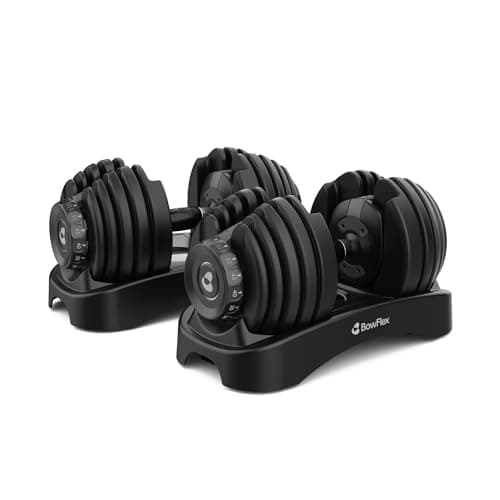
Bowflex SelectTech 552 Adjustable Dumbbells
Beginners and general strength trainers who want to replace a rack of dumbbells without a rack of dumbbells.
$399.00 · View on AmazonFull comparisonPrice as of September 20, 2026. #ad How we’re funded
Fixed: buy the weight you need
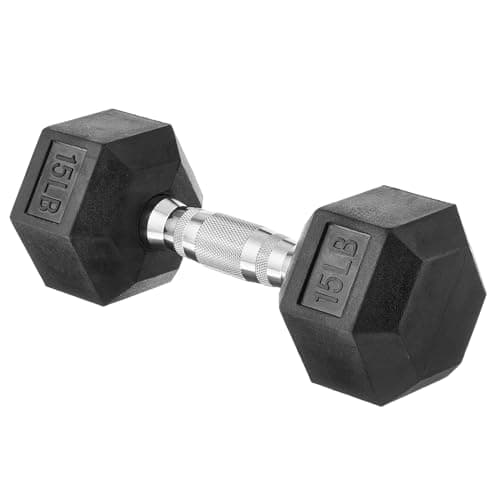
Amazon Basics Rubber Encased Hex Dumbbell
Building a fixed dumbbell set or filling gaps between adjustable settings.
Full comparisonAdjustable: highest ceiling
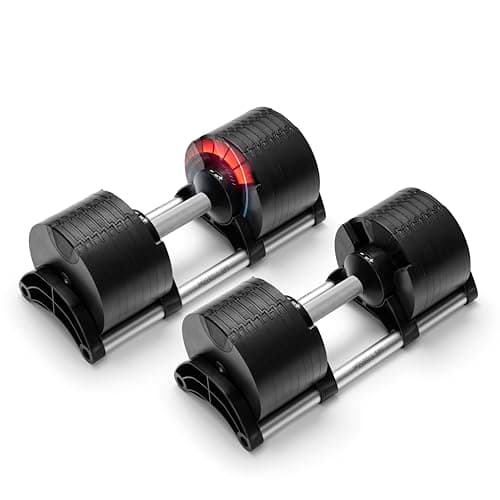
Nüobell 80 lb Adjustable Dumbbell
Lifters who want an 80 lb ceiling in a compact, traditional dumbbell shape.
$745.00 · View on AmazonFull comparisonPrice as of September 20, 2026. #ad How we’re funded
“What weight dumbbells should I buy?” is one of the most common questions in home fitness, and the honest answer is that there isn’t a single number — because different exercises need very different loads. The weight that’s right for a shoulder raise is far too light for a row, and the weight that’s right for a goblet squat will crush you on a lateral raise. So the real question isn’t “how heavy,” it’s “what range do I need, and how do I buy it without wasting money?”
This guide answers that in plain English: how to think about weight by exercise, sensible starting ranges, and whether a set of fixed pairs or a single adjustable set is the smarter buy. Every pick below shows a live price.
Why one weight is never enough
Dumbbell exercises fall into two broad groups. Bigger movements— rows, goblet squats, lunges, chest presses — use your strongest muscles and take meaningful weight. Smaller, isolation movements— lateral raises, biceps curls, rear-delt flyes, rotator-cuff work — use small muscles and need surprisingly little. It’s completely normal to row with a weight three or four times heavier than you’d use for a lateral raise. That’s why a single “perfect” dumbbell doesn’t exist, and why buying one pair usually leaves you either too light for the big lifts or too heavy for the small ones.
Sensible starting ranges
Treat these as rough starting points, not prescriptions — your right weight depends on your current strength, and the goal is always to choose by reps, not by ego. For most people newer to training:
- Small isolation moves (raises, flyes, rotator-cuff work): a light pair is often plenty to start.
- Curls and overhead presses: a moderate weight, heavier than your raise weight.
- Rows, goblet squats, lunges, chest presses: your heaviest working weight, since these use your strongest muscles.
The reliable test across all of them is the same: pick a weight you can move for roughly 8 to 12 controlled repswith one or two reps left in the tank. If you can’t hit 8 with good form, it’s too heavy; if 12 feels easy, it’s too light. Health authorities recommend training all the major muscle groups on two or more days a week, and a couple of well-chosen weights is enough to do exactly that at home.
Fixed pairs or an adjustable set?
Once you accept that you need a range, the buying decision gets simpler. Your two realistic options are buying several fixed pairs, or buying one adjustable set that spans the whole range.
Fixed dumbbells
Fixed pairs — like rubber-coated hex dumbbells — are cheap per weight, indestructible, and instantly ready. The downside is that covering a useful range means buying and storing three, four or more pairs, which adds up in both cost and floor space. They make the most sense if you only need one or two specific weights, or you’re filling gaps between the settings of an adjustable set.
Adjustable dumbbells
An adjustable setreplaces a whole rack in one footprint: a dial or twist changes the weight in seconds, so a single pair covers your light isolation work and your heavy compound lifts. It costs more upfront than one fixed pair but far less than the equivalent collection of them, and it’s the space-saving winner in a home gym. Just buy one whose top end you won’t reach in a month — and if you expect to get strong, a system like PowerBlock that extends with expansion kits leaves the most headroom. Our adjustable vs fixed dumbbells comparison lays out the full case for each.
Leave room to grow
The most common mistake is buying too light. Beginners get stronger quickly, and light dumbbells that felt challenging in week one can feel easy within a month or two. Whether you go fixed or adjustable, buy with progression in mind: an adjustable set with a ceiling well above where you start, or a plan to add a heavier fixed pair as you improve. It’s far cheaper to have a little headroom than to re-buy. And if you’re building a whole setup rather than just choosing weights, our how to build a home gym guide shows where dumbbells fit in the wider plan.
Frequently asked questions
What weight dumbbells should a beginner start with?
There is no single right number, because different exercises need different loads. Many beginners do well with a lighter pair for pressing, curls and raises and a heavier pair for rows and goblet squats. The practical test is reps: pick a weight you can move for about 8 to 12 controlled reps with a couple left in reserve. If you can't reach 8 with good form it's too heavy; if 12 is easy it's too light.
Should I buy fixed or adjustable dumbbells?
If you want to cover a range of weights without a rack, an adjustable set is usually the better value — one pair replaces many, in a single footprint. If you only need one or two specific weights, fixed dumbbells are cheaper and simpler. Adjustable sets shine as you get stronger, because you progress without buying more equipment.
How many dumbbell weights do I need?
Most home lifters get a long way with two working weights — a lighter one and a heavier one — because that spread covers both small isolation moves and bigger compound lifts. This is exactly the case an adjustable set is built for. If you buy fixed pairs, starting with two sensible weights and adding as you progress works well.
What if I outgrow my dumbbells?
Buy with progression in mind. Choose an adjustable set whose top end you won't reach in the first month or two, or a system like PowerBlock that you can extend with expansion kits. With fixed dumbbells, plan to add a heavier pair as you get stronger. Outgrowing light weights quickly is common, so leave headroom.
Sources
- CDC — Adult Activity: An Overview — CDC on muscle-strengthening 2+ days/week, 8–12 reps, all major muscle groups (accessed July 19, 2026)
- American Heart Association — Recommendations for Physical Activity in Adults — AHA's 150 min/week moderate aerobic + 2 days strength recommendation (accessed July 19, 2026)
- U.S. HHS / ODPHP — Physical Activity Guidelines for Americans (2nd ed.) — Federal guideline: 150–300 min/week moderate aerobic + muscle strengthening 2+ days (accessed July 19, 2026)
Keep reading
What weight kettlebell should I buy?
The same sizing question for the other half of a home gym, where guessing low is the usual mistake.
Size your kettlebellBest Adjustable Dumbbells
One pair that replaces a whole rack — compared on range, adjustment speed and feel.
See the picksAdjustable vs Fixed Dumbbells
The full case for each, on space, money, durability and feel.
Read the comparisonBest Equipment for Beginners
Where dumbbells fit in a simple starter kit that covers strength and cardio.
Read the guideStrength Training
How dumbbells fit alongside kettlebells, bands, racks and benches.
Explore strength