Competition vs Cast Iron Kettlebell
One keeps the same size and handle at every weight. The other sizes the bell to the iron and costs a fraction. What each published spec sheet actually promises - and which one belongs in a home gym.
These two bells do the same exercises and are built on opposite principles. A competition kettlebell— the Bells of Steel bell here — holds a fixed body size and a fixed handle at every weight in the line: nominally 210 mm wide with a 35 mm handle, with the weight brought up inside a hollow shell. A cast iron kettlebell— the Titan bell here — is solid metal, so the body grows with the weight and the handle is sized to the bell it is attached to.
That one structural difference drives everything else: what each costs, what the maker is willing to publish, how it feels in one hand versus two, and whether you can move between three weights in a session without relearning the movement. The short version is that the competition bell is the right purchase for a specific buyer and an expensive mistake for everyone else. Both options below show a live price.
How this is funded: we earn a commission if you buy through our links, at no extra cost to you. It never changes which product we recommend, and we’ll tell you when we’d skip one. Full disclosure.
| Feature | Competition (steel shell) | Cast iron (solid) |
|---|---|---|
| Body size across the line | Fixed - 210 mm at every weight | Grows with the weight |
| Handle diameter | 35 mm (34 mm on 4 and 6 kg) | 37 mm on this bell |
| Construction | Hollow shell, gravity cast as one piece, no filler | Solid single-piece casting |
| Published weight tolerance | ±200 g or better | Not published |
| Weight identification | Color coded to GSU / IKFF / IUKL, embossed kg and lb | Debossed in kg and lb |
| Sizes in the line | 16 sizes, 4-48 kg | 4-32 kg |
| Published warranty | Limited lifetime on the bell | 1 year |
| Price per pound | Premium, and worst at light weights | Cheapest way to own iron |
| Best for | Three or more matched weights, sport training | One or two bells, general strength |
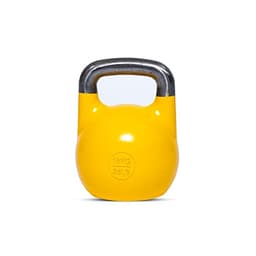
Competition (steel shell)
Bells of Steel Competition Kettlebell (16 kg)
Buy this if: Lifters building a matched set of three or more weights, and anyone training kettlebell sport where bell geometry is fixed.
Strengths
- Same 210 mm body and 35 mm handle at every weight, so technique carries between bells
- Published weight tolerance of ±200 g or better - the only tolerance figure in either column
- Color-coded to the GSU / IKFF / IUKL convention and embossed in both kg and lb
- Sixteen sizes from 4 to 48 kg, and a limited lifetime warranty on the bell
Trade-offs
- Several times the price of a cast bell of the same weight, and the gap is widest at light weights
- A 35 mm handle on a 210 mm ball is a bigger, thicker object than a light cast bell
- A hollow shell is pointless if you only ever own one weight
- The maker's own page conflicts on overall height, so treat that figure as approximate
Price as of October 26, 2026. #ad How we’re funded
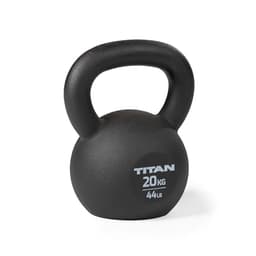
Cast iron (solid)
Titan Fitness 20 kg (44 lb) Cast Iron Kettlebell
Buy this if: Anyone buying their first one or two bells who wants the most weight per dollar and a handle scaled to the bell.
Strengths
- Far cheaper per pound, with nothing inside to shift and nothing to seal
- Titan publishes handle diameter (37 mm), handle width (8 in), height (10.5 in) and base width (4.5 in)
- Powder-coated single-piece casting with a flat base for renegade rows and push-ups
- A 4-32 kg line, so there is a next bell when you outgrow this one
Trade-offs
- The body grows with the weight, so a 12 kg and a 32 kg feel like different objects
- Handle thickness changes between sizes, which matters once you own several
- No published weight tolerance, and one year of warranty against the competition bell's lifetime
- A 37 mm handle is thicker than the 35 mm competition standard, so the two do not mix cleanly
Why a competition bell is the same size at every weight
A solid casting cannot be dimension-uniform. Iron has a fixed density, so if you double the weight of a solid bell you have to make it bigger — there is nowhere else for the metal to go. A competition bell gets around that by being a hollow shell of fixed outside dimensions, brought up to weight on the inside. The 16 kg and the 32 kg are the same object at two densities.
That is worth paying for in two situations and no others. The first is kettlebell sport— long sets of jerks, snatches and the long cycle, where the bell sits on the forearm for minutes and a change in ball diameter changes where the bruise lands. The second is owning several weights: if a session moves between a 16, a 20 and a 24, one handle shape across all three is the difference between one technique and three. Own one bell and swing it two-handed and uniform geometry does nothing for you at all.
The handle is where the two actually diverge
The competition standard is a 35 mm handle, and it is the same 35 mm whether the bell is 8 kg or 32 kg. Cast iron handles scale: Titan publishes 37 mm through an 8 in windowon its 20 kg bell, and the lighter bells in any cast line are thinner because the casting carries less metal. Neither number is better in the abstract. A thicker bar is harder to hold one-handed for high reps and more forgiving in two hands; a thinner bar is easier to grip and easier to rotate through a snatch.
What matters practically is that they do not mix. If you already own a 37 mm cast bell and add a 35 mm competition bell, you have two handles, which is the problem the competition bell was bought to solve. Pick a lane before you own three bells, not after. Our kettlebell weight guide works through which weights you will actually use, which is the decision that should come first.
Tolerance: the spec only one side publishes
Because a competition bell has to hit a target weight inside a body that cannot change, how close it lands is a real question. Bells of Steel publishes ±200 g or better, tightening to ±100 g on its lightest bells, and publishes a looser ±300 g for its own cast iron line — a maker drawing a distinction between its own products rather than making a claim about the category. Titan publishes no tolerance for its cast bells, and nor does almost anyone else in cast iron.
For swings, carries and squats a few hundred grams is irrelevant. It matters if you are chasing a one-arm press at the top of your range, and it matters in competition, where the bell is weighed. The more useful reading is the indirect one: a maker who prints a tolerance is a maker who measures, which is the same test our kettlebell brands guide applies across seven makers.
Price, and the light-bell trap
Without quoting a figure that will be stale by the time you read it: a competition bell sits in the premium tier where a comparable cast bell is budget-to-mid, and the gap is worst at light weights. A light competition bell is a mostly-empty full-size shell, so you are paying for geometry rather than metal — which is exactly backwards for a beginner, who needs a light bell first and has no second or third bell to match it to yet.
The honest sequence for most people is therefore: buy one cast iron bell in the weight you will swing, learn the hinge, add a lighter cast bell for pressing, and only move to a matched competition set if you find yourself training three weights regularly or entering something. That path wastes less money than buying the matched set first and discovering you use two of the five bells.
Finish, floor and the stuff nobody mentions
Both bells here are powder-coated, which is the finish that holds chalk and wears best; a sprayed paint or enamel is cheaper and marks first. Both have a flat base. The competition bell’s wider, flatter base is marginally more stable for renegade rows and push-ups, and its larger ball is marginally more awkward to store on a shelf. And one genuine competition-bell caution: if a hollow bell rattles when you shake it, that is a return rather than a quirk — some makers bring the weight up with filler rather than precise casting, so a loose interior is a real failure mode that a solid cast bell simply does not have.
Whichever you buy, it belongs on a mat rather than bare concrete or a wood floor, and it belongs within reach of the space you actually train in — see how to build a home gym for where a bell or two fits alongside the rest.
Frequently asked questions
What is the difference between a competition and a cast iron kettlebell?
Dimensions. A competition kettlebell is a hollow shell of fixed outside size - nominally 210 mm wide with a 35 mm handle - so every weight in the line is the same size in your hand and only the density changes. A cast iron kettlebell is solid metal, so the body grows with the weight and the handle is scaled to the bell. Competition bells cost several times as much and are built for lifters who move between three or more weights.
Are competition kettlebells better than cast iron?
Not better - different, and worse for most home buyers. The uniform geometry only pays off if you own several weights or train kettlebell sport. If you own one or two bells, a cast iron bell gives you more iron per dollar, a handle sized to the weight and nothing inside to shift. Buy competition for a matched set; buy cast iron for your first bell.
Is a 35 mm or a 37 mm kettlebell handle better?
Neither, but they do not mix. 35 mm is the competition standard and stays 35 mm at every weight; Titan publishes 37 mm on its 20 kg cast bell, and cast handles get thinner on lighter bells. A thicker bar is more forgiving for two-handed swings and harder to hold one-handed for high reps. The mistake is owning both, because then you have two handles and lose the consistency you paid for.
Do competition kettlebells have a weight tolerance?
The good ones publish one. Bells of Steel states plus or minus 200 g or better, tightening to 100 g on its lightest bells, and publishes a looser 300 g for its own cast iron line. Most cast iron makers - Titan included - publish no tolerance at all. A few hundred grams is irrelevant for swings and carries, matters for a press at the edge of your range, and matters in competition, where the bell is weighed.
Should a beginner buy a competition kettlebell?
Usually no. A beginner needs one light-to-moderate bell to learn the hinge, and a light competition bell is the worst value in the category - a mostly-empty full-size shell where you pay for the geometry rather than the metal. Buy one cast iron bell in the weight you will swing, add a lighter one for pressing, and only move to a matched competition set if you end up training three weights regularly.
Why are competition kettlebells color coded?
So the weight can be read across a hall. The convention runs 8 kg pink, 12 kg blue, 16 kg yellow, 20 kg purple, 24 kg green, 28 kg orange and 32 kg red, and Bells of Steel publishes its full chart against it from 4 kg black to 48 kg gold. Not every maker follows the same palette - some color code to their own - so within a brand the colors are reliable and across brands you should read the number on the bell.
Sources
- Bells of Steel — Competition Kettlebells (published specs) — The most complete competition-bell spec sheet we found, and the only one publishing a tolerance: a 35 mm handle on the 8-48 kg bells and 34 mm on the 4 and 6 kg, with a 60 mm grip window (64 mm on the two lightest); "gravity cast as ONE piece" with a hollow core and "no filler, shot or loose material" inside; "accurate to +/-200 g or better", tightening to +/-100 g on the lightest bells, against +/-300 g on the maker's own powder-coated cast iron line; sixteen sizes from 4 kg to 48 kg (8.8-105.8 lb) with the weight embossed in both kg and lb; built to "legal Girevoy Sport Union (GSU), IKFF, and International Union of Kettlebell Lifting (IUKL) standards"; limited lifetime warranty on the bell. NOTE: the page contradicts itself on height - Product Features says 11 1/8 in / 210 mm tall, Product Details says 11 in / 280 mm - and lists prices in Canadian dollars, so the height is recorded as approximate and the US price comes from the live layer (accessed October 24, 2026)
- Titan Fitness — 20 KG Cast Iron Kettlebell — The most complete kettlebell spec sheet of any maker we cover, and the only one that prints the handle in millimeters: 'Overall Height: 10.5-in.', 'Handle Width: 8-in.', 'Handle Diameter: 37 mm', 'Base Width: 4.5-in.', 'Finish: Powder-Coated Black', 'Material: Cast Iron', 'Product Weight: 20 KG / 44 lb.'. Titan describes a single-piece casting with a flat base and 'debossed weight indications in KG and LB', and states the line runs from 4 KG (9-pounds) up to 32 KG (70-pounds) with a one-year warranty. No weight tolerance is published (accessed October 10, 2026)
- Titan Fitness — Warranty policy — One-year coverage, and not transferable beyond the original purchaser who bought direct from Titan (accessed July 20, 2026)
- CDC — Adult Activity: An Overview — CDC on muscle-strengthening 2+ days/week, 8–12 reps, all major muscle groups (accessed July 19, 2026)
- U.S. HHS / ODPHP — Physical Activity Guidelines for Americans (2nd ed.) — Federal guideline: 150–300 min/week moderate aerobic + muscle strengthening 2+ days (accessed July 19, 2026)
Keep reading
Best Competition Kettlebells
Five competition bells ranked on published handle, tolerance and color standard - and the two that publish nothing.
See the picksBest Cast Iron Kettlebells
Six cast bells on finish, casting and what each maker is willing to publish.
See the cast iron picksBest Kettlebells
The whole field, including adjustable bells, ranked on handle, finish and weight jumps.
See all the picksCast Iron vs Adjustable Kettlebell
The other fork in this decision: one piece of iron or six weights in one footprint.
Read the comparisonWhat Weight Kettlebell Should I Buy?
Why the bell you swing is heavier than the bell you press, and what to buy second.
Read the guideKettlebell Brands
Who publishes a handle diameter, and whose warranty runs lifetime rather than thirty days.
Read the brands guide