How to choose a massage gun under $200
At this ceiling you are not buying a cut-down version of a flagship. You are choosing between three genuinely different jobs, and the specs tell you which is which.
1. How deep do you need it to go?
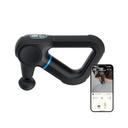
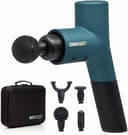
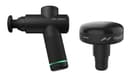
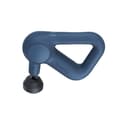
Amplitude is the distance the head travels on each stroke, and it is the honest dividing line in this category. 16 mm— the Theragun Prime — is full-depth percussion aimed at large muscle groups under real training load. 12 mm on the Ekrin B37 is close behind. 10 mmon the Theragun Relief is a deliberately gentler stroke that Therabody positions for general aches rather than athletic recovery. Hyperice publishes no amplitude figure for the Hypervolt Go 2 at all, and we will not estimate one — what that device does publish is speed, motor wattage and weight, which tells you it was designed around portability.
2. Will it stall when you lean on it?
Stall force is the amount of pressure the motor tolerates before the head stops. It is the spec people discover they needed after they buy. The Ekrin B37 publishes 56 lb, the Theragun Prime up to 30 lb and the Relief 20 lb; Hyperice does not publish a figure. If you are heavier, more muscular, or in the habit of pressing hard into a glute or a quad, the B37 is the device on this page built for that, and it is why it earns the deep-tissue slot rather than the top one.
3. Where will it actually live?
A massage gun in a cupboard does nothing. The Hypervolt Go 2is 1.5 lb with a 40W brushless motor and up to 3 hours of battery, which makes it the one that realistically goes to the gym, in hand luggage or in a desk drawer. The Ekrin B37is the opposite end: 2.2 lb, the longest advertised runtime here, and a device you plug in once a fortnight. The two Theraguns both run up to 120 minutes, which is several weeks of normal use but not a travel-first design.
What does $200 not buy?
Two things, stated plainly. Heat or cold attachments and app-controlled routines beyond the basics are where Therabody and Hyperice put their higher tiers. And nothing in this band is a medical device: a percussion gun is a comfort and mobility tool, not a treatment. If you are working around an injury rather than ordinary training soreness, that is a conversation with a clinician, not a purchase.
It is also worth knowing what the price ceiling does not cost you. Both Theraguns here carry the same ergonomic triangular handle as the models above them, and the Prime’s 16 mm stroke is the same amplitude Therabody uses across its main range. Under $200 is not a compromise band in this category the way it is in, say, treadmills.
Massage gun or foam roller?
If you are choosing between the two rather than adding to a collection, the foam roller is cheaper, needs no charging and covers broad areas like the thoracic spine and IT band in a way no handheld device can. The massage gun is faster, far more precise, and workable on calves and forearms you cannot get body weight onto. Most people who own both use the roller before training and the gun after. Our foam roller roundup and the broader recovery tools page cover that trade in full.
What we would buy
The Theragun Primefor most people under this ceiling: full 16 mm amplitude, five speeds, four attachments and the Therabody app. The Ekrin B37if you press hard and want the 56 lb stall force and the longest battery on the page, and you do not care about an app. The Hypervolt Go 2 if the device has to live in a bag rather than a drawer. And the Theragun Reliefif the target is general stiffness, older hands, or anyone who found a full-depth gun uncomfortable — it is the cheapest device here and the gentlest, and those two facts are related on purpose.