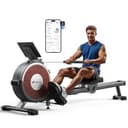
How to choose a rowing machine when capacity is the constraint
Four questions, in this order. The first one eliminates most of the market, which is why it goes first rather than last.
1. Is the published capacity above your weight, with real headroom?
Start by reading the maker’s figure rather than a retailer’s summary, and then leave yourself room. The published number covers your bodyweight plus whatever else is on the machine — shoes, a weight vest if you use one, a water bottle in the holder, the force of a hard catch. Rowing is not a static load: the moment the legs drive, the seat carriage sees more than your standing weight.
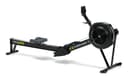
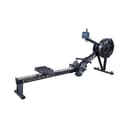
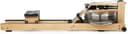
That is the argument for choosing a machine with a comfortable margin instead of one that technically clears. At 300 lb, a 300 lb-rated machine is a machine you are at the limit of on every stroke; a 500 lb-rated one is a machine you will never think about. Both the Concept2 RowErg and the Body-Solid R300 publish 500 lb, and both WaterRowers publish 700 lb, which is the highest figure on this site by a wide margin.
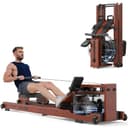
Two notes on honesty here. The MERACH NovaRow R50 Pro, a machine we recommend elsewhere, publishes nomaximum user weight at all on its US spec sheet, which is why it is not a pick on this page despite being a good air rower. And the Stamina 1110’s 250 lb figure appears on its Amazon listing rather than on Stamina’s own spec page — a difference worth knowing about when a number matters this much.
2. How high is the seat, and can you get off it?
This is the spec that gets skipped and the one readers tell us about afterwards. A rowing stroke is seated and zero-impact. Getting onto the seat and off it is neither, it happens twice per session regardless of how the rowing goes, and no amount of technique fixes a seat that is too low for your knees and hips.
The published range across this catalog is wide: the WaterRower Oak sits at 9 in, the Concept2 at 14 in, the Sunny Phantom Hydro at 15.4 in and the Obsidian Surge at 17 in. For a heavier rower, higher is almost always easier — the rise from a 9 in seat is a deep squat from a dead stop with nothing but a sliding seat to push off. This is the single biggest reason we rank the Concept2 above the higher-capacity WaterRower: 500 lb and a 14 in seat beats 700 lb and a 9 in one for almost everybody who is not over 500 lb.
Body-Solid, YOSUDA and MERACH publish no seat height at all, which the table says out loud. If seat height is the deciding factor for you, that absence is itself information: measure a comparable machine in a shop before committing.
3. Does the rail let a bigger body finish the stroke?
Capacity and fit are different problems that get conflated. A machine can be rated for your weight and still be too short in the rail for your legs, which caps the drive and turns rowing into a half-stroke. The figure that matters is the seat travel(sometimes published as rail inseam), not the overall rail length — the ends of the track carry hardware, not usable travel.
Of the makers who publish one, the longest in our catalog is MERACH at 47.2 in of inseam on a 53.7 in track, then the Sunny MotionMax at 45.7 in and the Sunny Dual Rail at 40.9 in. Concept2 publishes neither a rail inseam nor a height limit for the RowErg, but its 96 in assembled length is the longest machine here, which is a reasonable proxy for a long track. If height as well as weight is your constraint, our rowing machines for tall people page ranks on exactly that spec.
4. Who else is going to use it?
A rated machine in a one-person home and a rated machine in a four-person household are different purchases, and the difference is the warranty rather than the number. Body-Solid’s Endurance terms run to lifetime on the frame, five years parts, two years electronics and one year labor — with the caveat, which Body-Solid states plainly, that the cover is residential only and anything sold for commercial use ships “AS IS”. Concept2 publishes five years on frame parts and two on moving parts and the monitor. WaterRower publishes one year standard, upgradeable to five on the structural frame and three on components if you register within the first year — so the headline five-year figure requires you to do something.
Neither YOSUDA nor MERACH publishes a frame warranty term we could read for these models. At their prices that is not unreasonable, and it is the real trade you are making at the budget end: the capacity figure is published, the recourse if the frame fails is not.
What about the 250 and 300 lb machines?
They are not bad machines and most of them are on this site for good reasons. The Sunny Phantom Hydro SMART is the best-specified water rower under four figures, the Dual Rail is the easiest handle to pull gently and repeatably, and the Obsidian Surge has the highest seat in the catalog at 17 in. If you are inside their published figures, read our main rowing machine roundup instead — it ranks the whole field without the capacity filter.
What we will not do is quietly recommend a 250 lb-rated machine to a reader who weighs more than that because it scores well on everything else. That is the specific failure this page is built to avoid, and it is the reason the pick list here is five machines rather than fifteen.
A note on rowing as the exercise, not the equipment
Rowing earns its reputation with heavier beginners for a defensible reason: it is seated, it is non-impact, and it loads legs, back and arms in one movement, so a single machine covers most of the federal aerobic recommendation of 150–300 minutes of moderate activity per week. The intensity is set by how hard you pull, not by a speed the machine dictates, which means the same machine works on a first week and in a fifth year.
It is not the only honest answer. A seated recumbent bike with a backrest is usually cheaper, has a higher seat and asks nothing of your hip hinge at all; our upright vs recumbent bike comparison covers that route, and exercise equipment for heavier beginners looks across categories rather than within one. If getting to and from the floor is the hard part of your day, that is the page to read first.