Gym Equipment vs Free Weights
Machines, free weights and bodyweight compared on cost, space, safety and how fast you'll actually progress at home.
How this is funded: we earn a commission if you buy through our links, at no extra cost to you. It never changes which product we recommend, and we’ll tell you when we’d skip one. Full disclosure.
Where to start for each approach
The free-weight pick
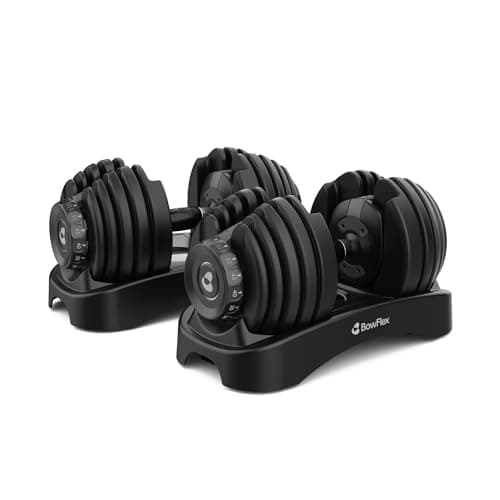
Bowflex SelectTech 552 Adjustable Dumbbells
Beginners and general strength trainers who want to replace a rack of dumbbells without a rack of dumbbells.
$399.99 · View on AmazonFull comparisonPrice as of October 22, 2026. #ad How we’re funded
For barbell training
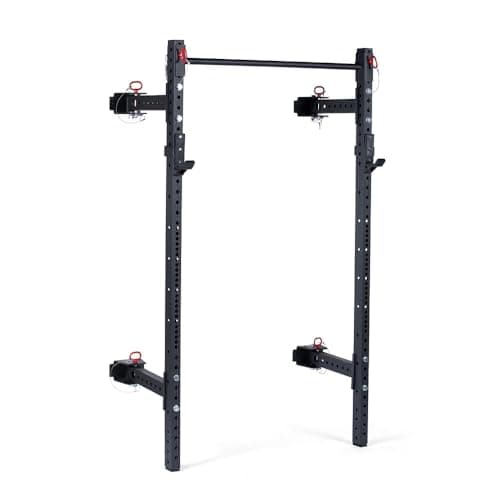
Titan Fitness T-3 Series Power Rack
Home gym lifters who want a rack-and-bench setup that handles heavy work.
$417.99 · View on AmazonFull comparisonPrice as of October 22, 2026. #ad How we’re funded
Rack with a cable machine
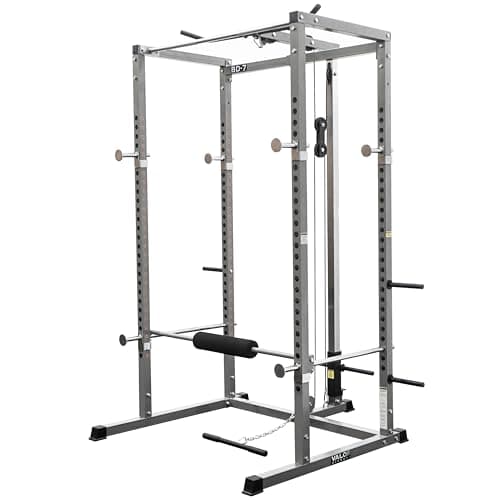
Valor Fitness BD-7 Power Rack
Home lifters who want a cage plus cable pulldown in one purchase.
Full comparison
“Machines or free weights?” is the wrong question for most home gyms — the honest answer is that free weights win for the great majority of people building a gym at home, on cost, space and versatility. Machines aren’t bad; they’re just expensive, bulky, and single-purpose, which is a poor fit for a spare room. Bodyweight training, meanwhile, is free and surprisingly effective. Here’s how the three approaches actually compare.
Cost and space
This is the decisive factor at home. One pair of adjustable dumbbells costs a few hundred dollars and does the work of a dozen machines, in the footprint of a side table. A single commercial-style machine often costs more and trains one muscle group. Bodyweight training costs nothing. Unless you have a big room and a big budget, free weights and bodyweight are simply more gym per dollar and per square foot.
Safety and progression
Machines guide the movement, so they’re forgiving for beginners and safe to push to failure alone. Free weights demand more technique but build the stabilizing strength that transfers to real life — and a power rack with safety bars makes even heavy barbell work safe without a spotter. For progression, free weights let you add tiny increments and train a huge range of movements, which is why they carry most home programs.
The honest verdict
Start with free weights: a pair of adjustable dumbbells and a bench, adding a barbell and rack if you go heavy. Use bodyweight movements to fill gaps for free. Add a machine only when you have a specific reason — a nagging joint that needs a guided path, or an isolation exercise you can’t replicate with weights. For nearly everyone else, machines are the expensive answer to a question free weights already solved. Not sure where to begin? Our home gym build guide lays out the order.
Frequently asked questions
Are free weights better than machines for building muscle?
For most people at home, yes — free weights recruit stabilizing muscles, train movements you use in real life, and one pair of adjustable dumbbells covers dozens of exercises. Machines isolate muscles well and let you train safely without a spotter, but they cost more and each does fewer jobs.
Which is safer, machines or free weights?
Machines guide the movement path, which lowers the risk of losing control of a weight, so they're forgiving for beginners and for training to failure alone. Free weights demand more technique but build real-world stability. A power rack with safety bars makes heavy free-weight training safe without a spotter.
What's most space- and budget-efficient for a home gym?
Free weights, easily. A single pair of adjustable dumbbells replaces a rack of machines for a fraction of the cost and floor space, and bodyweight training costs nothing at all. Machines make sense at home only when you specifically want their isolation or guided path.
Can I build a complete workout with just free weights?
Yes. Adjustable dumbbells and a bench — optionally a barbell and rack — cover every major movement pattern: press, pull, squat, hinge and carry. Add bands for assistance and mobility, and you have a complete program without a single machine.
Sources
- CDC — Adult Activity: An Overview — CDC on muscle-strengthening 2+ days/week, 8–12 reps, all major muscle groups (accessed July 19, 2026)
- U.S. HHS / ODPHP — Physical Activity Guidelines for Americans (2nd ed.) — Federal guideline: 150–300 min/week moderate aerobic + muscle strengthening 2+ days (accessed July 19, 2026)
Keep reading
Best adjustable dumbbells
The most versatile free-weight purchase for a home gym, with live prices.
See the dumbbell picksBest power racks
The rack that makes heavy free-weight training safe without a spotter.
See the rack picksHow to build a home gym
The full step-by-step plan, whichever approach you choose.
Read the build guideFor beginners
The simple starter kit — and why it's free weights, not machines.
See the starter kitTypes of fitness equipment
The wider map this comparison sits inside - every equipment category and who each one suits.
Learn the categories